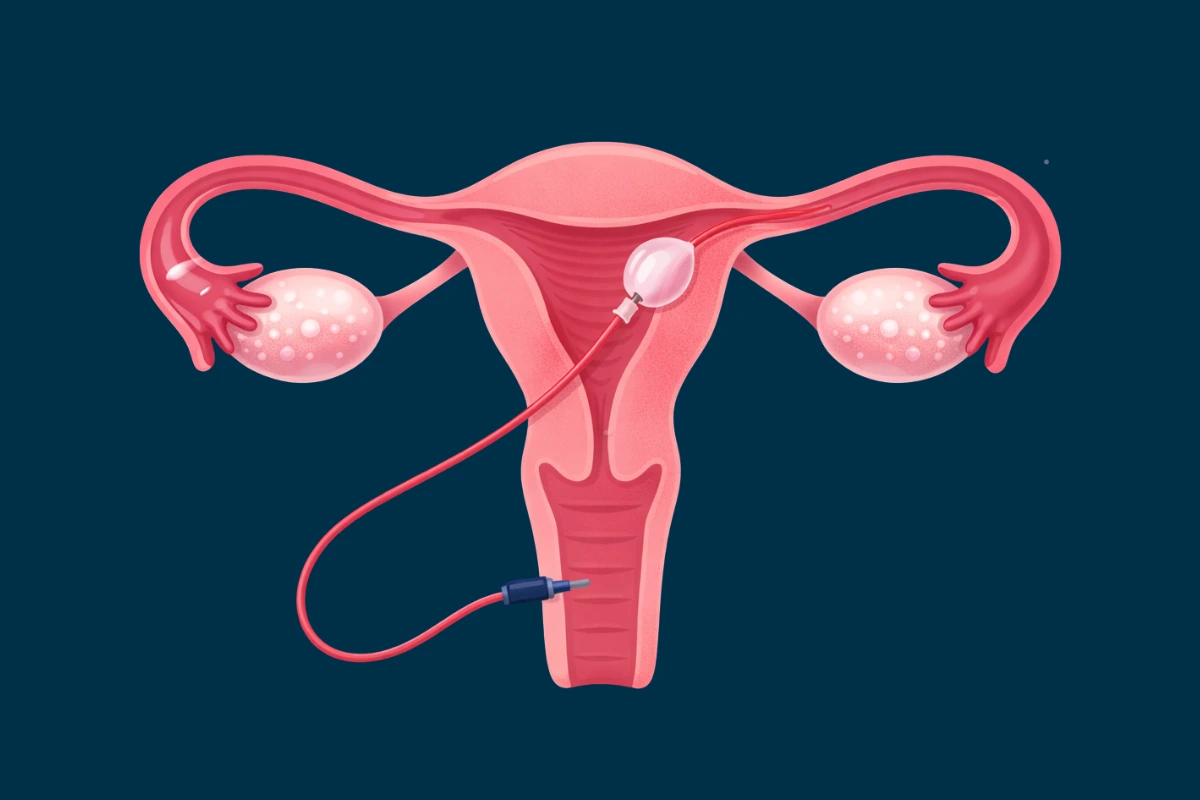
A tubal block means one or both fallopian tubes are blocked, which can make it difficult for the egg and sperm to meet naturally. It is one of the important causes of female infertility and is often only discovered during fertility investigations.
For many women, this diagnosis can feel frustrating, especially when periods are normal, ovulation seems regular, and there have been no obvious symptoms. That is what makes tubal blockage difficult. It can be silent, but still have a major impact on conception.
Dr. Neha Lalla offers tubal block evaluation and treatment planning in Dubai with a clear, structured approach that looks at where the blockage is, what may have caused it, and what the most realistic next step should be.
Tubal block refers to a blockage in the fallopian tube that prevents the normal passage of the egg, sperm, or embryo. The fallopian tubes play an essential role in natural conception, so when they are blocked, pregnancy may not happen even if other parts of the fertility workup seem normal.
A blockage can affect one tube or both. It may be located near the uterus, in the middle part of the tube, or towards the far end near the ovary. The location matters because not all tubal blocks are the same, and not all are treated in the same way.
In some women, the blockage is due to previous infection, endometriosis, adhesions, inflammation, or prior pelvic surgery. In others, it is discovered without a clear history of any problem.
Tubal block assessment may be recommended for women who have:
Some women come in after a scan has shown tubal blockage. Others come in simply because pregnancy is not happening, and tubal testing becomes part of the answer.
The first step is understanding the full fertility picture. Dr. Neha Lalla will review how long you have been trying to conceive, your menstrual history, previous pregnancies, scan results, and any history of infection, surgery, endometriosis, or pelvic pain.
This is important because the significance of a tubal block depends on more than just the report. It depends on the broader context.
Tubal blockage is often detected through fertility investigations such as a hysterosalpingogram or other imaging studies. In some cases, more detailed assessment may be needed to understand whether the tube is truly blocked, where the blockage is, and whether the rest of the tube appears healthy.
Sometimes a blockage reported on one test may need further clarification before deciding on treatment.
Treatment depends on the location and extent of the block, whether one or both tubes are involved, and whether there are other fertility factors present.
In selected cases, procedures such as tubal cannulation or tubal recanalization may be considered. In others, laparoscopic evaluation may be needed, especially if endometriosis, adhesions, or hydrosalpinx are also suspected.
And in some cases, the most appropriate next step may be fertility treatment that bypasses the tubes altogether. The key is choosing the option that actually fits the type of blockage, rather than offering the same answer to everyone.
Tubal blockage is one of the major reasons pregnancy may not be happening, even when ovulation and periods seem normal.
The location and type of block matter. Proper evaluation helps distinguish between a blockage that may be treatable and one where another fertility route may be more appropriate.
A clear diagnosis helps you move forward with the right plan instead of losing time on treatment that is unlikely to help.
Once the tubal condition is understood, the next step becomes much clearer, whether that involves observation, intervention, surgery, or assisted reproduction.
Tubal blockage may sometimes be linked to endometriosis, adhesions, or hydrosalpinx. A proper workup helps identify the bigger picture.
One of the most important benefits is knowing what is possible, what is worth trying, and what is unlikely to help. That clarity matters.
In some cases, yes. If the other tube is open and functioning well, natural conception may still be possible. The answer depends on which tube is blocked and whether there are any additional fertility factors.
If both tubes are blocked, natural conception may be more difficult. The next step depends on where the block is, whether it is treatable, and what the overall fertility picture looks like.
No. Many women with blocked tubes have no obvious symptoms at all. It is often found only during fertility evaluation.
Sometimes, yes. Certain types of blockage may be treated with procedures such as tubal cannulation or tubal recanalization. In other cases, treatment may involve laparoscopy or moving to another fertility option.
Possible causes include previous pelvic infection, endometriosis, adhesions, prior surgery, hydrosalpinx, or inflammation. Sometimes no clear cause is identified.
Not always. Treatment depends on the location and nature of the blockage. Some women need a targeted procedure, while others need a different fertility pathway altogether.
That depends on your fertility history, scan results, age, and whether there are any additional factors affecting conception. A proper consultation is the best way to understand the right next step.
If you have been told you have a blocked fallopian tube, or pregnancy is not happening and you want a clearer fertility assessment, Dr. Neha Lalla offers tubal block evaluation and treatment planning tailored to the exact type of blockage and your reproductive goals.
When the tubes are part of the problem, the next step should be guided by detail, not assumption.

Dr. Neha Lalla is an Obstetrician & Gynecologist with 6 years of experience inclusive of 3 years of exclusive experience in Gynecological Endoscopy (Laparoscopy & Hysteroscopy surgery).