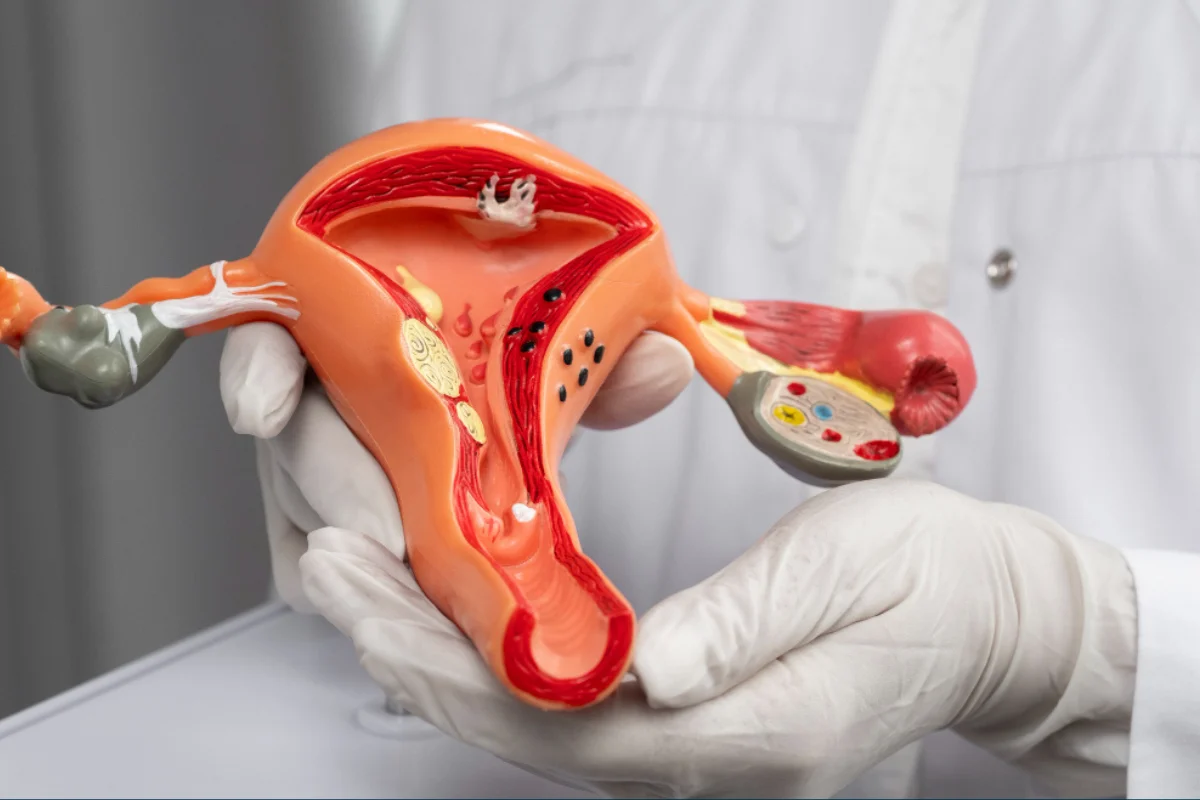
Hysteroscopic myoma resection is a minimally invasive procedure used to remove fibroids that are growing inside the uterine cavity. These fibroids, often called submucosal fibroids, can be a major reason behind heavy periods, prolonged bleeding, repeated spotting, fertility difficulties, or recurrent miscarriage in some women.
What makes this procedure different is that it is done through the cervix, without any cuts on the abdomen. For many women, that means a more direct treatment, a quicker recovery, and a better chance of addressing the real reason behind their symptoms.
Hysteroscopic myoma resection is a procedure used to remove fibroids that project into the inside of the uterus. It is performed using a hysteroscope, which is a thin camera-guided instrument passed through the vagina and cervix into the uterus.
Because the fibroid is approached from inside the uterine cavity, there is no need for abdominal incisions. This makes it a very effective option when the fibroid is located in the right place for hysteroscopic treatment.
Not all fibroids can be removed this way. This procedure is specifically meant for fibroids that are inside the cavity or significantly bulging into it. The exact suitability depends on the size, depth, and location of the fibroid.
Hysteroscopic myoma resection may be recommended for women who have:
This procedure is most useful when the fibroid is clearly affecting the uterine cavity and is likely to be the reason behind the bleeding or fertility issue.
The first step is confirming whether the fibroid is suitable for hysteroscopic removal. Dr. Neha Lalla will review your symptoms, scan findings, menstrual history, and fertility plans if relevant.
This matters because the treatment approach depends not just on the presence of a fibroid, but on exactly where it is and how much of it is inside the uterine cavity.
The procedure is performed by passing a hysteroscope through the vagina and cervix into the uterus. The uterine cavity is gently expanded with fluid so the fibroid can be seen clearly.
Specialised instruments are then used to carefully remove the fibroid from inside the cavity. No abdominal cuts are needed. Depending on the size and depth of the fibroid, the procedure may be completed in one sitting or, in selected cases, planned in stages.
Recovery is usually straightforward. Mild cramping, light bleeding, or watery discharge can happen for a short time after the procedure. Most women are able to return to normal activity quite quickly, depending on the extent of treatment.
You will be given clear advice on recovery, follow-up, and what to expect over the days that follow.
The biggest advantage is that the fibroid can be removed through the cervix, which means no abdominal incisions and no external scars.
Submucosal fibroids are a common cause of heavy periods, and removing them can make a significant difference to bleeding patterns.
The procedure removes the fibroid while keeping the uterus intact, which is important for women who want future pregnancy or uterus-preserving treatment.
When a fibroid is distorting the uterine cavity, removing it may improve the environment for implantation and pregnancy.
Because the procedure is minimally invasive and does not involve abdominal surgery, recovery is often quicker and easier than other surgical approaches.
This is a very focused procedure designed specifically for fibroids inside the uterine cavity, making it an effective option when the fibroid location is right.
This procedure is used for submucosal fibroids, which are fibroids growing inside the uterine cavity or bulging into it.
No. The procedure is done through the vagina and cervix, so there are no abdominal cuts.
Yes. Fibroids inside the uterine cavity are a common cause of heavy or prolonged periods, and removing them can often improve bleeding significantly.
In selected cases, yes. If the fibroid is affecting the shape of the uterine cavity, removing it may help improve fertility or reduce miscarriage risk.
No. This depends on the fibroid’s size, depth, and position. Fibroids located deeper in the uterine wall or outside the cavity may require a different treatment approach.
Most women recover quickly, although mild cramping or light bleeding may continue for a few days. Recovery depends on the extent of the procedure and your individual healing.
You should contact the clinic if you have heavy bleeding, severe pain, fever, foul-smelling discharge, or any symptom that feels unusual during recovery.
If you have been told you have a fibroid inside the uterus and are struggling with heavy bleeding, fertility concerns, or repeated miscarriage, Dr. Neha Lalla offers careful evaluation and minimally invasive treatment based on the exact location of the fibroid and what it is actually causing.
When the fibroid is inside the cavity, the treatment should be just as precise.

Dr. Neha Lalla is an Obstetrician & Gynecologist with 6 years of experience inclusive of 3 years of exclusive experience in Gynecological Endoscopy (Laparoscopy & Hysteroscopy surgery).