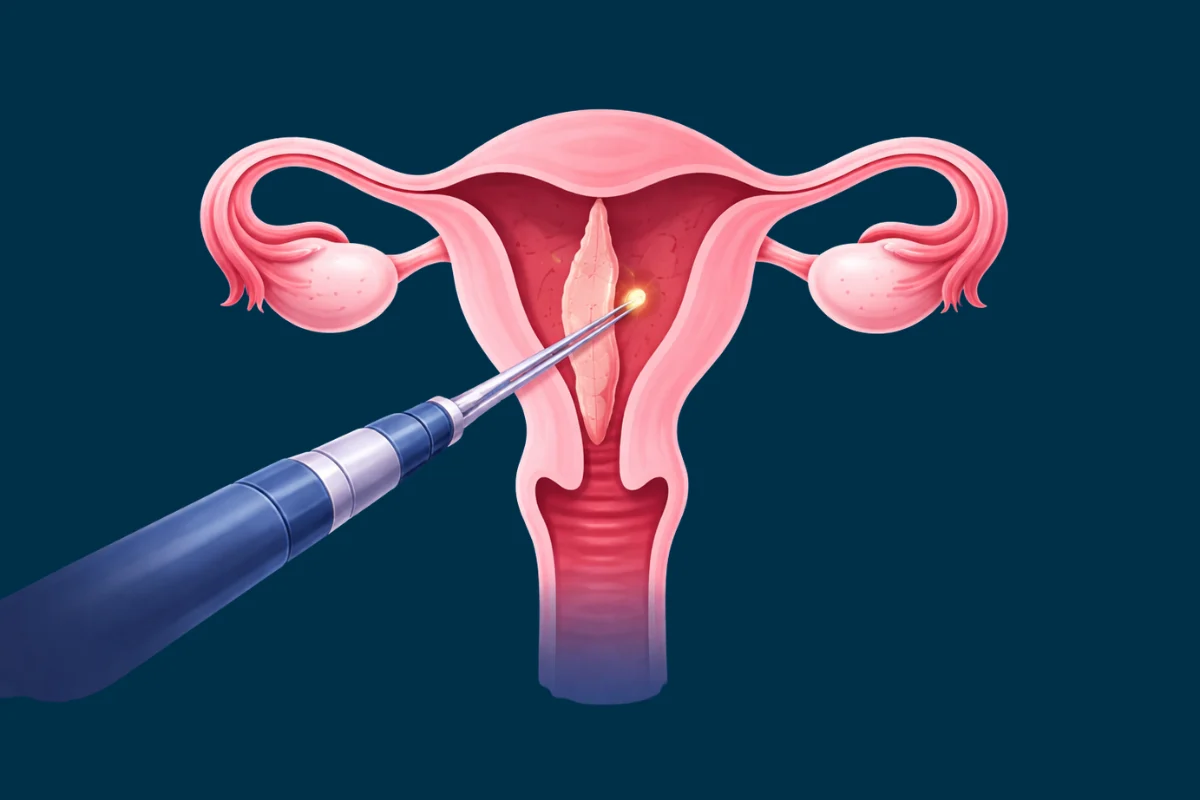
Hysteroscopic septal resection is a minimally invasive procedure used to treat a uterine septum, which is a structural partition inside the uterus. In some women, this septum may be linked to recurrent miscarriage, difficulty conceiving, or problems with implantation.
For many women, the diagnosis only comes up after pregnancy loss, fertility investigations, or a scan that suggests the shape of the uterus is not quite normal. When a septum is clearly part of the picture, treatment can help create a more favourable uterine cavity for pregnancy.
Hysteroscopic septal resection is a procedure used to remove or divide a uterine septum from inside the uterus using a hysteroscopic approach. A hysteroscope, which is a thin camera-guided instrument, is passed through the vagina and cervix into the uterus, so the septum can be seen and treated directly without any cuts on the abdomen.
A uterine septum is a congenital condition, which means it is present from birth. Some women never know they have one until they start investigating recurrent miscarriage or fertility concerns. Others may only discover it during imaging or a hysteroscopy done for another reason.
The aim of treatment is to create a more normal-shaped uterine cavity when the septum is believed to be affecting reproductive outcomes.
Hysteroscopic septal resection may be recommended for women who have:
Not every uterine septum needs treatment. The decision depends on its size, shape, reproductive history, and whether it is likely to be affecting fertility or pregnancy.
The first step is confirming that a uterine septum is present and understanding whether it is likely to be relevant to your reproductive history. Dr. Neha Lalla will review your scans, fertility history, miscarriage history, and any previous treatment or investigations.
This part matters because treatment should be based on the full picture, not just the presence of an anatomical finding on a scan.
The procedure is performed by passing a hysteroscope through the vagina and cervix into the uterus. The uterine cavity is gently expanded with fluid so the septum can be seen clearly.
Using fine instruments, the septum is carefully divided under direct vision to improve the shape of the uterine cavity. No abdominal cuts are needed. The procedure is precise and targeted to the area inside the uterus.
The exact approach depends on the size and extent of the septum and whether any additional uterine cavity findings are present.
Recovery is usually straightforward. Mild cramping, light bleeding, or watery discharge may occur for a short time afterwards. Most women return to normal activities fairly quickly.
You will be given clear advice on recovery, follow-up, and when it is appropriate to start trying for pregnancy or proceed with fertility treatment, depending on your individual case.
The first step is confirming that a uterine septum is present and understanding whether it is likely to be relevant to your reproductive history. Dr. Neha Lalla will review your scans, fertility history, miscarriage history, and any previous treatment or investigations.
This part matters because treatment should be based on the full picture, not just the presence of an anatomical finding on a scan.
The procedure is performed by passing a hysteroscope through the vagina and cervix into the uterus. The uterine cavity is gently expanded with fluid so the septum can be seen clearly.
Using fine instruments, the septum is carefully divided under direct vision to improve the shape of the uterine cavity. No abdominal cuts are needed. The procedure is precise and targeted to the area inside the uterus.
The exact approach depends on the size and extent of the septum and whether any additional uterine cavity findings are present.
Recovery is usually straightforward. Mild cramping, light bleeding, or watery discharge may occur for a short time afterwards. Most women return to normal activities fairly quickly.
You will be given clear advice on recovery, follow-up, and when it is appropriate to start trying for pregnancy or proceed with fertility treatment, depending on your individual case.
The procedure is done through the cervix, which means there are no abdominal incisions and no external scars.
When a uterine septum is affecting implantation or pregnancy maintenance, treating it may help improve reproductive outcomes.
Because it is hysteroscopic, recovery is usually easier and quicker than more invasive surgery.
This is a targeted treatment for a clearly identified anatomical concern inside the uterus.
The procedure improves the uterine cavity while preserving the uterus itself, which is important for women planning pregnancy.
When a uterine septum has been identified as part of the fertility picture, treating it can help create a more defined next step.
A uterine septum is a partition of tissue inside the uterus that is present from birth. It can affect the shape of the uterine cavity and, in some women, may be linked to miscarriage or fertility problems.
Yes, in some women it can. A uterine septum is one of the structural factors that may contribute to recurrent miscarriage or implantation problems.
No. The procedure is done through the vagina and cervix using a hysteroscope, so there are no cuts on the abdomen.
Not always. Treatment depends on the size of the septum, your reproductive history, and whether it is likely to be affecting fertility or pregnancy outcomes.
In selected cases, yes. If the uterine septum is contributing to implantation problems or miscarriage, treating it may improve the chances of a healthier pregnancy.
Most women recover quickly, though mild cramping or light bleeding may continue for a few days. Recovery advice will be tailored to your case.
You should contact the clinic if you have heavy bleeding, severe pain, fever, foul-smelling discharge, or any symptom that feels unusual after the procedure.
If you have been told you may have a uterine septum, or you are investigating recurrent miscarriage or fertility concerns, Dr. Neha Lalla offers careful assessment and targeted hysteroscopic treatment based on your reproductive history and uterine findings.
Sometimes a small structural issue can have a big impact. The right treatment starts with seeing it clearly.

Dr. Neha Lalla is an Obstetrician & Gynecologist with 6 years of experience inclusive of 3 years of exclusive experience in Gynecological Endoscopy (Laparoscopy & Hysteroscopy surgery).