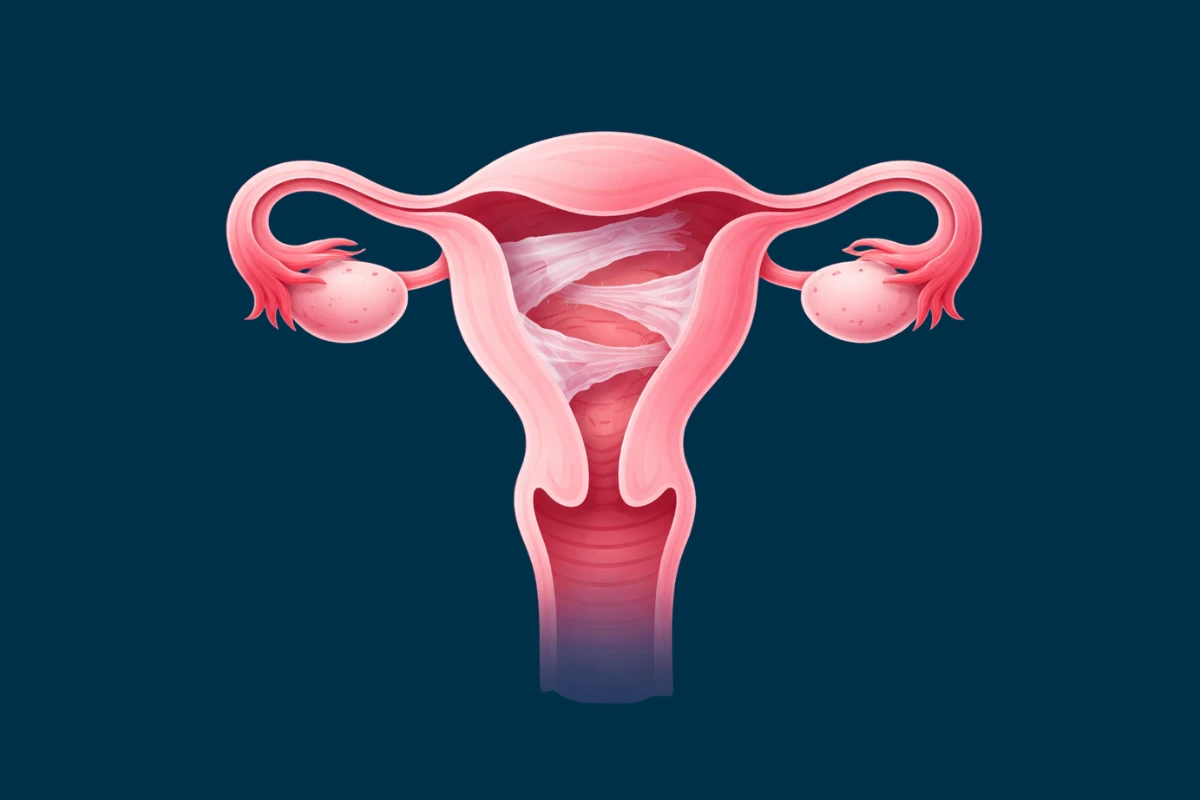
Asherman’s syndrome is a condition where scar tissue forms inside the uterus and partially or completely sticks the uterine walls together. This can affect menstrual flow, fertility, implantation, and in some women, the ability to carry a pregnancy normally.
For many women, the signs are not obvious at first. Periods may become very light, stop unexpectedly, or fertility treatment may not be working despite everything else seeming normal. In these situations, hysteroscopy plays an important role because it allows the uterine cavity to be seen directly and treated with precision.
Dr. Neha Lalla offers hysteroscopic treatment for Asherman’s syndrome in Dubai with a clear, structured approach focused on restoring the uterine cavity as safely as possible.
Hysteroscopy for Asherman’s syndrome is a procedure used to diagnose and treat scar tissue inside the uterus. A thin camera, called a hysteroscope, is passed through the vagina and cervix into the uterus, allowing the uterine cavity to be seen directly.
If scar tissue is present, it can often be carefully released during the same procedure. This is called hysteroscopic adhesiolysis. The goal is to reopen the uterine cavity, improve the shape and function of the uterus, and support better menstrual and reproductive outcomes where possible.
Because the procedure is done through the cervix, there are no cuts on the abdomen. This makes it the most direct and precise way to treat intrauterine adhesions.
Hysteroscopy for Asherman’s syndrome may be recommended for women who have:
It is especially considered when the menstrual pattern has changed after a uterine event, or when fertility investigations suggest that the uterine cavity may not be normal.
The first step is understanding whether scar tissue is likely to be present and how much it may be affecting the uterine cavity. Dr. Neha Lalla will review your menstrual history, fertility history, previous procedures, miscarriage history, scans, and any treatment you have already had.
This part matters because Asherman’s syndrome is often suspected from the pattern of symptoms and past uterine history, but hysteroscopy is what confirms it clearly.
A hysteroscope is passed through the vagina and cervix into the uterus. The cavity is gently expanded with fluid so the inside can be seen properly.
If adhesions are present, they are carefully released under direct vision to reopen the uterine cavity. The approach is precise because the aim is not simply to cut scar tissue, but to restore the cavity as safely and effectively as possible while protecting healthy tissue.
The extent of treatment depends on how mild or severe the adhesions are.
Recovery is usually straightforward, though the follow-up is an important part of treatment. Some women may need additional monitoring, repeat imaging, or in selected cases, a follow-up hysteroscopy to check healing and reduce the chance of re-adhesion.
You will be guided clearly on what to expect next, especially if fertility is part of the reason for treatment.
This is the most important benefit. The procedure allows the adhesions to be seen and treated directly rather than relying only on scans.
When scar tissue is distorting the cavity, releasing it can improve the uterine environment.
Women with very light or absent periods due to intrauterine adhesions may notice improvement after treatment, depending on the severity of the scarring.
If scar tissue is interfering with implantation or pregnancy, treatment may help improve reproductive outcomes in selected women.
The procedure is done through the cervix, so there are no external incisions or scars.
For women trying to conceive, diagnosing and treating intrauterine adhesions can be an important step before moving ahead with further fertility treatment.
Asherman’s syndrome is a condition where scar tissue forms inside the uterus and causes the uterine walls to stick together partially or completely.
It often develops after a uterine procedure such as curettage, miscarriage management, delivery-related intervention, or sometimes after infection inside the uterus.
Yes. Scar tissue inside the uterus can affect implantation, menstrual flow, and the ability to maintain a pregnancy.
It may be suspected based on symptoms and history, but hysteroscopy is one of the most accurate ways to diagnose it because it allows direct visualisation of the uterine cavity.
Yes. In many cases, diagnosis and treatment can happen during the same hysteroscopic procedure.
Not always. In more severe cases, follow-up monitoring or an additional procedure may sometimes be needed to assess healing or treat recurrent adhesions.
You should contact the clinic if you have heavy bleeding, severe pain, fever, foul-smelling discharge, or any symptom that feels unusual after treatment.
If your periods have become unusually light, stopped after a uterine procedure, or you are facing fertility or implantation concerns with possible scar tissue inside the uterus, Dr. Neha Lalla offers careful evaluation and hysteroscopic treatment tailored to your situation.
When the uterine cavity is not functioning as it should, the first step is understanding why and treating it with precision.
Dr. Neha Lalla is an Obstetrician & Gynecologist with 6 years of experience inclusive of 3 years of exclusive experience in Gynecological Endoscopy (Laparoscopy & Hysteroscopy surgery).