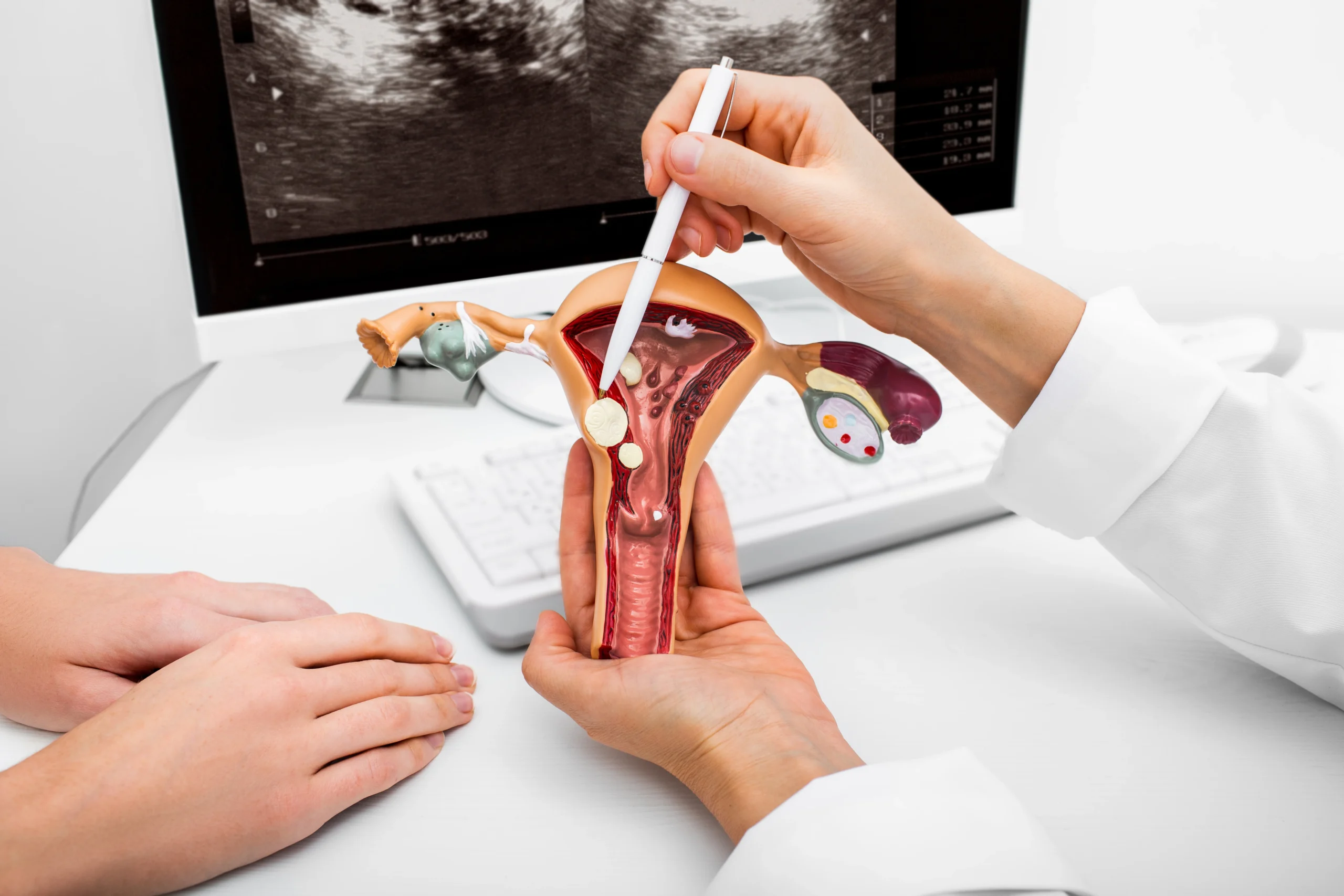
Hysteroscopy is a camera-guided procedure used to examine the inside of the uterus and, when needed, treat problems during the same sitting. It is often recommended when a woman has abnormal bleeding, uterine polyps, submucosal fibroids, scar tissue, a retained IUD, or fertility concerns that need a closer look inside the uterine cavity.
One of the reasons hysteroscopy is so valuable is that it shows what scans sometimes cannot. For many women, it is the procedure that finally explains why bleeding has changed, why periods are not behaving as expected, or why pregnancy is not happening despite normal reports elsewhere.
Hysteroscopy is a minimally invasive procedure in which a very thin camera, called a hysteroscope, is passed through the vagina and cervix into the uterus. This allows the uterine cavity to be seen directly on a screen, without any cuts on the abdomen.
It can be used in two ways. A diagnostic hysteroscopy is done to look inside the uterus and identify the cause of symptoms or abnormal findings. An operative hysteroscopy is done when treatment is performed during the same procedure, such as removing a polyp, treating a small fibroid inside the cavity, releasing adhesions, or correcting a uterine septum.
Because it is performed through the natural passage, hysteroscopy is often a very effective and less invasive way to diagnose and treat problems inside the uterus.
Hysteroscopy may be recommended for women who have:
It is especially useful when the issue appears to be inside the uterine cavity and a direct view is needed for a clearer diagnosis or targeted treatment.
The first step is understanding why hysteroscopy is being advised. Dr. Neha Lalla will review your symptoms, scan reports, menstrual history, fertility concerns, and any previous procedures or treatments.
This is important because hysteroscopy is most useful when there is a strong reason to look inside the uterus, not just because a scan was unclear.
A thin hysteroscope is passed through the vagina and cervix into the uterus. No abdominal cuts are needed. The uterine cavity is gently expanded with fluid so the inside can be seen clearly.
If the hysteroscopy is purely diagnostic, the goal is to examine the cavity and identify any structural issue. If treatment is planned, procedures such as removing a polyp, treating a small intracavitary fibroid, releasing adhesions, or addressing other abnormalities may be done during the same sitting.
The exact steps depend on the reason for the procedure and whether it is diagnostic, operative, or both.
Recovery is usually straightforward. Some women may experience mild cramping, light spotting, or slight discomfort for a short time afterwards. Most return to normal activities quickly, depending on whether a treatment was done during the procedure.
You will be given clear advice about recovery, follow-up, and what to expect after the procedure.
Hysteroscopy allows the uterine cavity to be seen directly, which can be far more accurate than relying on imaging alone in certain situations.
In many cases, the problem can be identified and managed during the same sitting, which reduces delays and repeated procedures.
Because the procedure is done through the vagina and cervix, there are no cuts on the abdomen.
When bleeding patterns change and scans do not fully explain why, hysteroscopy often gives a much clearer answer.
For women with infertility or recurrent miscarriage, hysteroscopy can identify uterine cavity issues that may affect implantation or pregnancy.
Most women recover quickly and are able to return to routine activities soon after the procedure.
Hysteroscopy is a procedure used to examine or treat the inside of the uterus. Some hysteroscopies are diagnostic only, while others involve minor surgical treatment during the same procedure.
Some women may experience mild cramping or discomfort, depending on how the procedure is done and whether treatment is performed. Dr. Neha will explain what to expect in your case.
No. Hysteroscopy is performed through the vagina and cervix, so there are no abdominal incisions.
Yes. It can be very useful in identifying uterine cavity issues such as polyps, adhesions, septum, or submucosal fibroids that may affect implantation or pregnancy.
Most women recover quickly. Mild cramping or spotting may happen for a short time, but many are back to normal activities within a day or two, depending on the type of procedure.
You should contact the clinic if you have heavy bleeding, fever, severe pain, foul-smelling discharge, or any symptom that feels unusual after the procedure.
If you have abnormal bleeding, a uterine polyp, fibroid, fertility concerns, or a scan that needs a clearer answer, Dr. Neha Lalla offers hysteroscopy in Dubai with a precise and minimally invasive approach.
Sometimes the most important next step is simply seeing the uterine cavity properly and treating what is found.

Dr. Neha Lalla is an Obstetrician & Gynecologist with 6 years of experience inclusive of 3 years of exclusive experience in Gynecological Endoscopy (Laparoscopy & Hysteroscopy surgery).