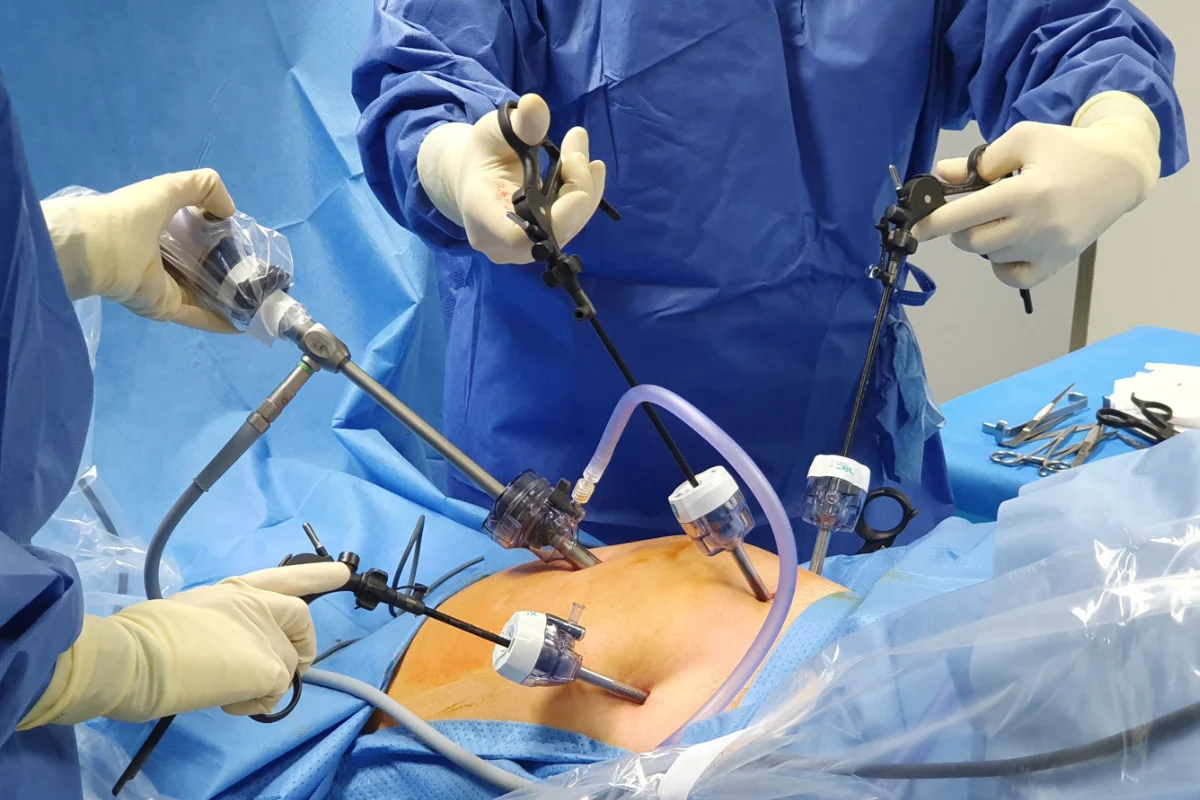
Laparoscopy is a minimally invasive surgical procedure used to diagnose and treat a wide range of gynaecological conditions through small abdominal incisions. It allows direct visualisation of the pelvic organs and is often used to manage endometriosis, ovarian cysts, fibroids, adhesions, ectopic pregnancy, and certain causes of infertility.
For many women, laparoscopy offers both a clear diagnosis and effective treatment in the same procedure, with less pain, smaller scars, and a faster recovery compared to open surgery.
Laparoscopy is also known as keyhole surgery. It is performed using a thin camera called a laparoscope, which is inserted through a small cut near the navel. Additional tiny incisions are used for specialised instruments that help the surgeon examine and treat the pelvic organs with precision.
In gynaecology, laparoscopy is commonly used to assess the uterus, ovaries, fallopian tubes, and surrounding pelvic structures. It may be done as a diagnostic laparoscopy to find the cause of symptoms when scans are inconclusive, or as an operative laparoscopy to treat the condition during the same procedure.
Because the surgery is performed through small incisions, it is generally associated with less tissue trauma and a smoother recovery than traditional open surgery.
Laparoscopy may be recommended for women who have:
It is especially valuable when a more accurate diagnosis is needed or when treatment can be safely performed using a minimally invasive approach.
Before surgery, Dr. Neha Lalla will review your symptoms, scan reports, medical history, and treatment goals in detail. If fertility is a concern, that will also be considered during planning. The reason for laparoscopy, the expected benefits, and whether it is the right option for you will be explained clearly.
You may be advised to complete blood tests, imaging, or a pre-anaesthetic evaluation before the procedure.
Laparoscopy is performed under general anaesthesia. Small incisions are made on the abdomen, and the laparoscope is inserted to provide a clear view of the pelvic organs. Depending on the reason for surgery, additional instruments may be used to:
The exact procedure depends on whether the surgery is diagnostic, therapeutic, or both.
Many laparoscopic procedures are done as day-care or short-stay surgery. Some women may need a brief hospital stay depending on the complexity of the case. Mild abdominal discomfort, bloating, shoulder tip pain, or tiredness can happen in the first few days and usually improve steadily.
Detailed recovery advice, medications, activity restrictions, and follow-up plans will be discussed before discharge.
Laparoscopy avoids the large abdominal incision used in open surgery, which usually means a more comfortable recovery and smaller scars.
Most women recover sooner and return to routine activities earlier than they would after traditional open surgery.
Laparoscopy gives a direct view of the pelvic organs, helping identify problems that may not always be seen clearly on scans.
In many cases, the cause of symptoms can be found and treated during the same surgery, which reduces delays in care.
Because the procedure is minimally invasive, post-surgical pain is often less compared to open abdominal surgery.
Laparoscopy can help diagnose and treat pelvic causes of infertility such as endometriosis, adhesions, ovarian cysts, or tubal issues in selected patients.
Laparoscopy is still a surgical procedure performed under anaesthesia, but it is less invasive than open surgery. Because it uses small incisions, recovery is often easier for most patients.
Recovery depends on the condition being treated and how complex the surgery is. Many women feel significantly better within a few days, but full recovery may take one to three weeks for simpler procedures and longer for more extensive surgery.
Some laparoscopic procedures are performed as day-care surgery, while others may require an overnight stay. This depends on the type of surgery and your individual recovery.
Yes. Laparoscopy is one of the most accurate ways to diagnose endometriosis directly and can often allow treatment in the same procedure.
Yes. It may be recommended when a pelvic cause of infertility is suspected, such as endometriosis, adhesions, ovarian cysts, or tubal problems.
You should contact the clinic if you have severe pain, heavy bleeding, fever, redness or swelling at the incision site, vomiting, or any symptom that feels unusual during recovery.
If you have been advised surgery, are dealing with ongoing pelvic symptoms, or want a clearer diagnosis for pain, infertility, or suspected endometriosis, Dr. Neha Lalla offers advanced laparoscopic evaluation and treatment tailored to your condition.

Dr. Neha Lalla is an Obstetrician & Gynecologist with 6 years of experience inclusive of 3 years of exclusive experience in Gynecological Endoscopy (Laparoscopy & Hysteroscopy surgery).